By Justin Beene
“A beautiful answer is always preceded by a more beautiful question.” e.e. cummings
What do relationships have to do with changing a city?
Everything.
Grand Rapids has real momentum. In 2025, it was named the #1 fast-growing U.S. metro for jobs and talent. But momentum hasn't meant progress for everyone. Nearly $1 billion is given in local philanthropy each year, yet many residents still face significant economic challenges.
That gap is not primarily a resource problem. It is a relationship problem. A city does not change because a plan gets written. It changes when its people begin to see one another differently. An old story about a boy on a raft still shows us what a broken relationship costs, and what a vulnerable one can do.
Huck’s Dilemma
In Mark Twain’s Adventures of Huckleberry Finn, Huck is a thirteen-year-old white boy in the pre-Civil War South helping a runaway named Jim escape to freedom on a raft down the Mississippi river. However, as he reflects he realizes the Fugitive Slave Law made it a crime to aid a runaway, which required every citizen to help capture one. Huck begins to believe that helping Jim is going to cost him more than punishment. It will cost him his soul. So starts to write a letter to Miss Watson back on the plantation, turning Jim in, and hoping to clear his conscience.
That is a conflicted and broken relationship: choosing “rightness” over the person right in front of you, because distance feels safer than connection. We make the same choice with neighbors, coworkers, and strangers who do not share our background, our politics, or our zip code.
University of Virginia Center for Politics
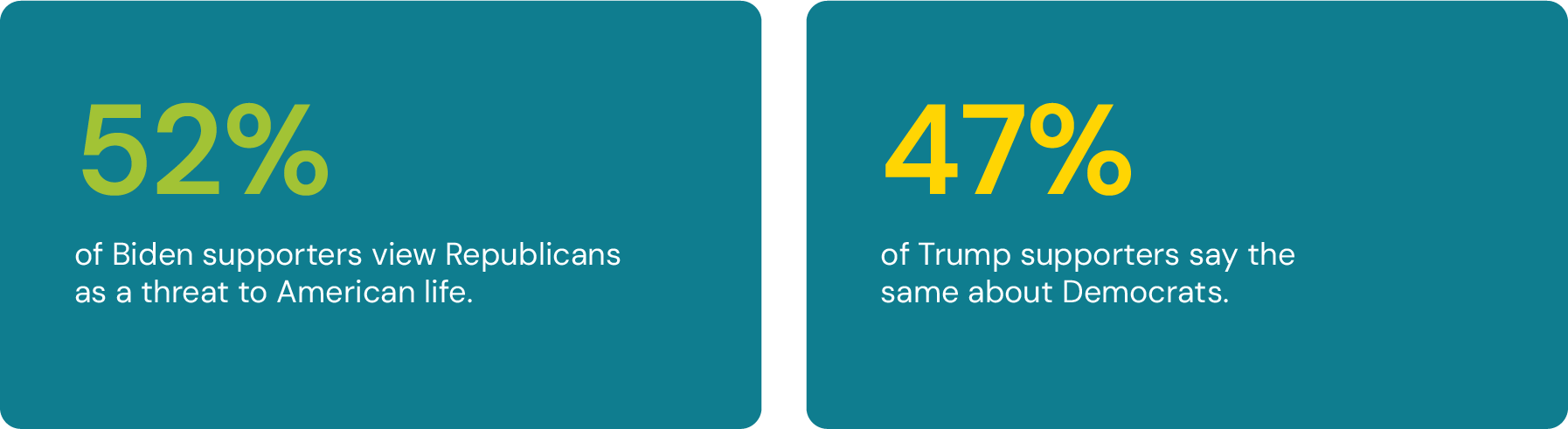
We see the same lack of trust here at home. Through more than 1,000 surveys and hundreds of interviews, Thrive & Prosper has heard one thread again and again: Grand Rapids is a place people believe in, but a place where too many of us are still strangers to each other.
Huck’s Turn
After writing the letter, Huck thinks back on the journey down the Mississippi and the friendship that quietly formed along the way. Something happens that his upbringing, his culture, even his theology never prepared him for. He realizes Jim is a human being. Huck is undone. He tears up the letter, certain he has damned himself for good. Huck is undergoing grace, the kind that empowers us to risk it all for the sake of those we love. He says to himself, and to God:
“All right, then, I’ll go to hell.”
That is the moment real transformation happens, for Huck and for Jim. They become bound together, not by agreement, but by their shared humanity and their willingness to be vulnerable with each other. Now both fugitives, they become a picture of what vulnerability could look like for us in Grand Rapids.
Agreement is not the goal. Shared humanity creates trust, and trust is what makes lasting change in a city possible. It is a shift from fractured, siloed, and competition toward self-awareness about our own flaws, brokenness, culture, and even economic position, while still seeing someone else’s brokenness and believing they are worthy of a trusting relationship, for the sake of the city.
A theory, a blueprint, and a plan work beautifully for building a skyscraper. They are not how change happens among people who share a geography. People themselves, and the connections between them, are the solution.
“Change happens at the pace of deep relationships, and relationships happen at the speed of trust.”
One of the lies we have been fed is that humans are primarily rational beings. Change built on this assumption designs programs to “fix” people without knowing them, a kind of social engineering that divides us further.
However, humans are primarily relational beings. Change built on this truth seeks healing at the root: relationship. It invites us to walk with whoever we would call “other.” Instead of social engineers, we become artisans and co-creators of our city, working with people like us, people not like us, and even people who do not like us.
Places are like people. They are healed relationally and over time they bear the mark of whoever loves them.
“People did not love Rome because she was great. She was great because they loved her.” G.K. Chesterton
Cocktails + Cross-Pollination
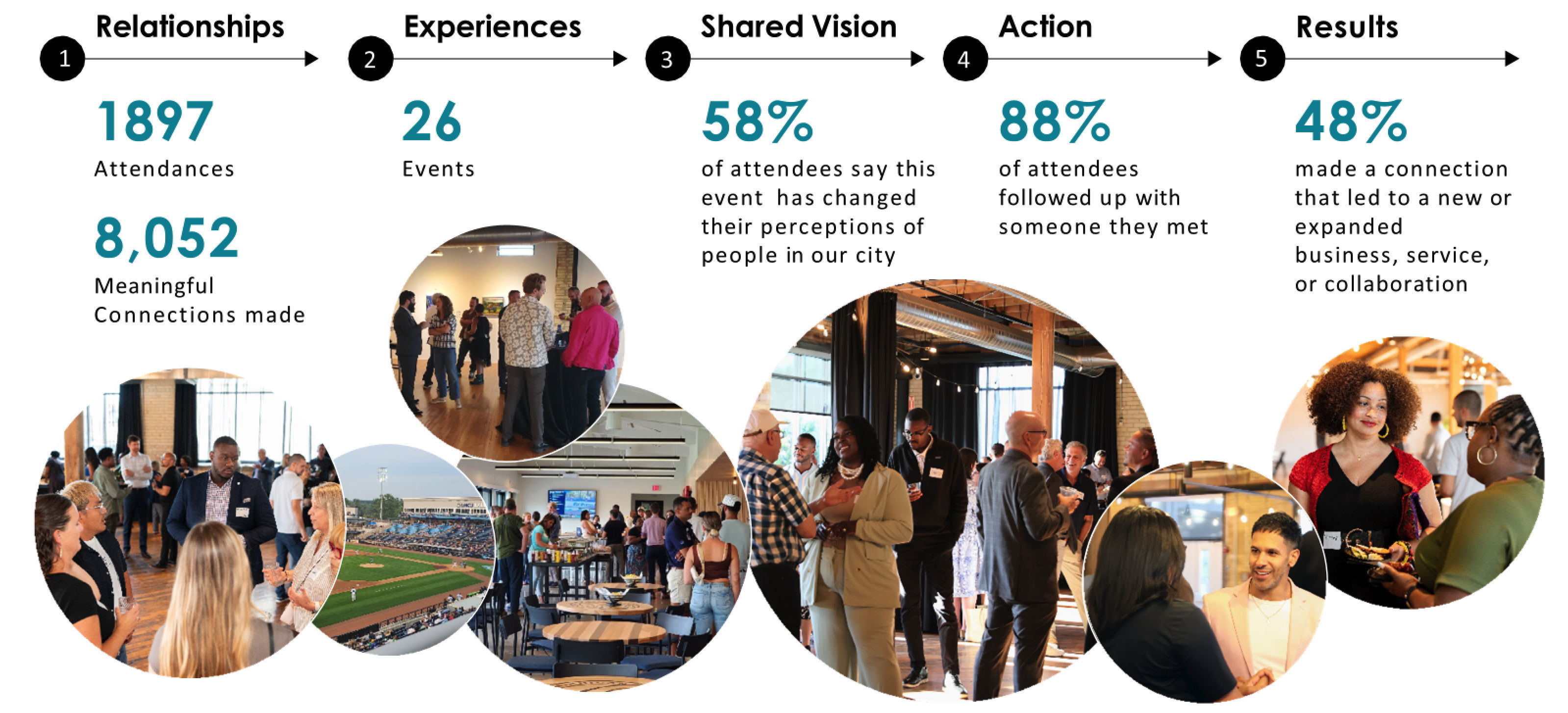
Locally, we have been putting into practice this idea. We call it Cocktails + Cross-Pollination. It puts people who would not otherwise meet into the same room, on purpose. First names only. No work talk.
Ken Hofman: Present on Purpose
You might see Ken in a tailored suit and pocket square, or in a white t-shirt, khaki shorts, and sandals. Either way, he is a pillar: a natural connector and friend to Grand Rapids entrepreneurs, business leaders, and Southtown.
After 40 years building a corporate law practice at Miller Johnson, Ken sensed it was time for deeper relationships in the city. He became a regular at Cocktails + Cross-Pollination, then a host. Now of counsel, he follows up on those connections: opening his rolodex for startups, reviewing contracts for nonprofits, even showing up to Pilates just to be present. Literally and figuratively, Ken has been stretching himself across race, class, and sector for the sake of the city.
And he has made it personal. Ken and his friend Mark have started seven intentional fellowship groups, more than 80 men across race, religion, and sector, gathering in their homes every month for food, wine, and honest conversation. Ken pours into each one: their families, their businesses, their fears. In the process, he has become vulnerable and more human himself, holding both the brokenness and the hope he sees in each of us.
From Broken to Vulnerable
The first dysfunction is the most personal. It’s the first necessary shift in Thrive & Prosper’s Relationships to Results™ approach: from Broken Relationships to Vulnerable Relationships.
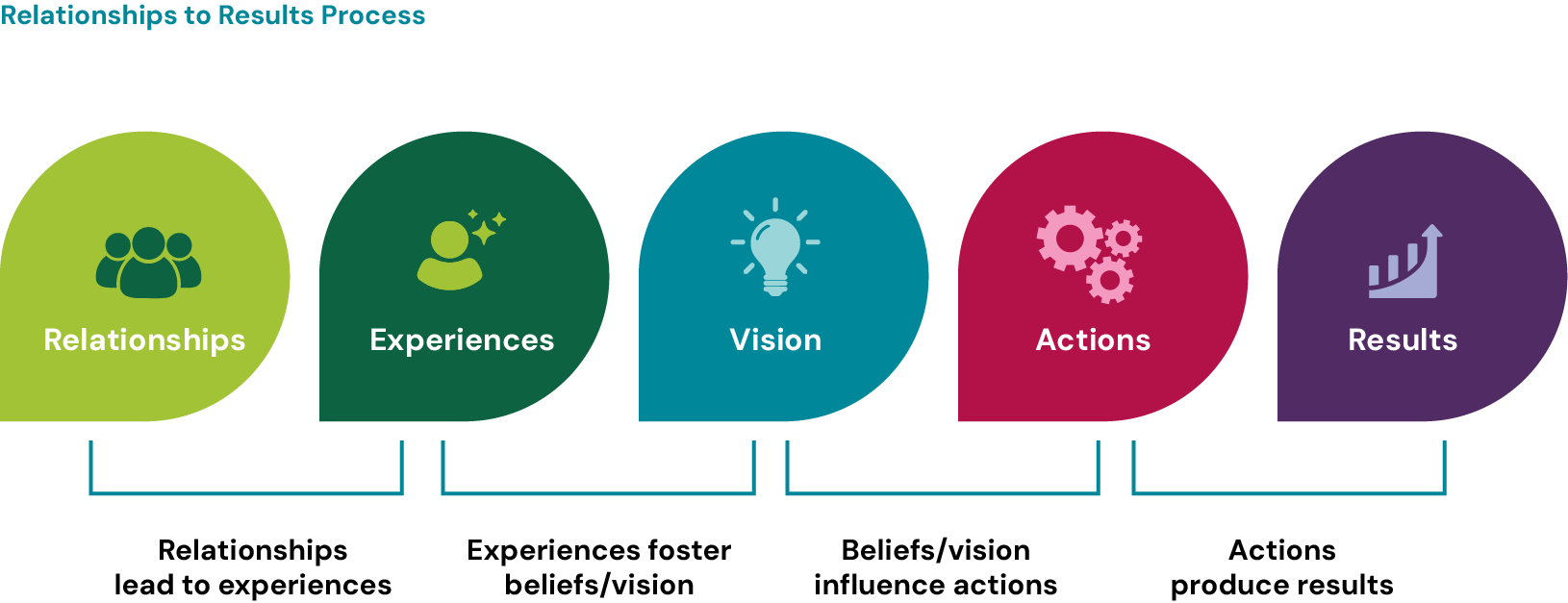
We do not change a city through programs, capital campaigns, or even networking. These are good. But for us the power is in proximity: we change it by choosing to trust even when it is risky, and by staying curious about people who do not think, look, or even vote like us.
Together, we are moving from “I don’t need people who aren’t like me” to “the city needs us all to thrive.”
Where We Go From Here
A city thrives when its people stop treating each other as strangers and start treating each other as neighbors. And it is already working: 68% of people involved in Thrive & Prosper agree the movement has begun improving economic mobility for everyone, and 60% say their involvement led to a significant positive outcome.
