"Out beyond ideas of wrongdoingand rightdoing there is a field. I'll meet you there. When the soul lies downin that grass, the world is too full to talk about." Rumi, 13th-centuryPersian poet
Why does a city stay stuck, even when almost everyone in it wants things to get better?
Last month, we began a five-part series on the dysfunctions that hold a city back. We started with Huck Finn on a raft, choosing a person over a policy. We started with broken relationships because everything else flows from them. Broken relationships is where we started, come first because everything else flows from them. Relationships shape our experiences. Experiences expand or shrink our vision for what is possible. And those beliefs, combined with access and opportunity, drive the results we get.
To illustrate this concept, pull up your phone. Scroll your texts and recent calls. For most of us, five to ten people carry outsized influence over our lives. We drive the same roads to work, school, and church, so predictably that our phones know where we are headed before we leave the driveway. Same friends. Same vacations. Same ballot, year after year.
That is the second dysfunction: limited experiences. None of it is sinister on its own. But limited contact with people who are different from us draws lines in the sand. Lines become alliances. Alliances become allegiances. Left unchecked, the "other" stops being merely different and becomes the enemy.
Crush Adidas
Before Michael Jordan laced up his first Air Jordans, Nike was the scrappy upstart. Adidas and Puma owned the athletic world, and Nike co-founder Phil Knight saw an opening. As the story is often told, the company's internal rallying cry was simple: Crush Adidas.
It sounds harmless. Every underdog needs a giant. But rivalry grows teeth. It is not enough for me to win. You have to lose. My identity becomes about being over and against you, and when things do not go my way, it must be your fault.
That is the great illusion of limited experience: everything is a contest. Us versus them. Right versus left. Rich versus poor. This either/or thinking feels clarifying, or even courageous at times, but it shrinks our imagination of what is possible. When our posture is judgmental, belittling, and all about "us" winning, we naturally compete with others instead of working together. And a city that runs on rivalry eventually needs someone to blame.
Someone Must Be Blamed
In October 2003, the Chicago Cubs were five outs from their first World Series in 58 years. A foul ball drifted toward the stands, and a lifelong fan named Steve Bartman reached for it along with several others. He deflected it away from the Cubs' left fielder. The umpire ruled it was not interference. The Cubs unraveled anyway and lost the series, and an entire city united itself by blaming one innocent man. The ESPN film *Catching Hell* tells the story. It is hard to watch.
The word for what happened to Bartman isn't new at all. It's actually an ancient practice. In ancient near east, on the Day of Atonement (Yom Kippur, the holiest day of the Jewish year), the high priest laid his hands on a goat or innocent lamb, symbolically placing the community's “sins” on it, then driving it into the wilderness as the community curses and jeers at it. The scapegoat “carried” the blame away, outside of the city……and the community, at least temporarily, is held together.
We have been unconsciously repeating that ritual ever since. In 1692, Salem hanged its own neighbors as witches. Today, depending on your camp, the scapegoat might be immigrants and refugees, or it might be police officers. It's the rich. The poor. The left. The right. We've normalized it so much we call it the black sheep of the family. It's the same cycle. Different scapegoat. Different enemy. Every side anoints its own…and drives them out to reaffirm our allegiance to a false identity and temporarily relieving us from our internal conflict.
We Become What We Hate
Early in my career, I spent almost a decade counseling traumatized teenagers, many of them in foster care. One theme came up again and again: a lot of young people grew a hatred for the abuse they suffered at the hands of the people who were supposed to love them. And rightfully so. And for many became fixated on it. Consumed by it. What often happens is that when you hate something so ferociously, you can actually end up becoming it. Hating those who hurt you. But then transmiting the wounds you dont transform. Rivalry binds you to the very thing you oppose.
The French-born Stanford scholar René Girard explained why. We learn what to want by watching what others want, an idea he called mimesis, from the Greek word for imitation. When two people reach for the same thing, but it appears only one can have it, scarcity creeps in. Imitation turns into rivalry, and rivalry left alone turns into violence. Picture two enemies face to face, each ready to kill in the name of god, country, or land. They are mirror images.
So what happens when we start seeing rivals as no different from us? Broken humans, perhaps with different relationships, experiences, and beliefs about the world. But rightfully so. You have your own experiences, and so do they. Not tolerance for the sake of tolerance, but for the sake of freedom. When we unplug from rivalry, we actually reclaim their humanity, and our own. Instead of being bound up, we are freed up to work toward the whole city thriving, not just our camp.
Who You Know Shapes What You Experience
This is not just philosophy. The researchkeeps landing in the same place: who we know shapes the opportunities we get.
A small circle does not just limit who we know. It limits what we can achieve.
Local Spotlight
Matt “Monk” Duncan
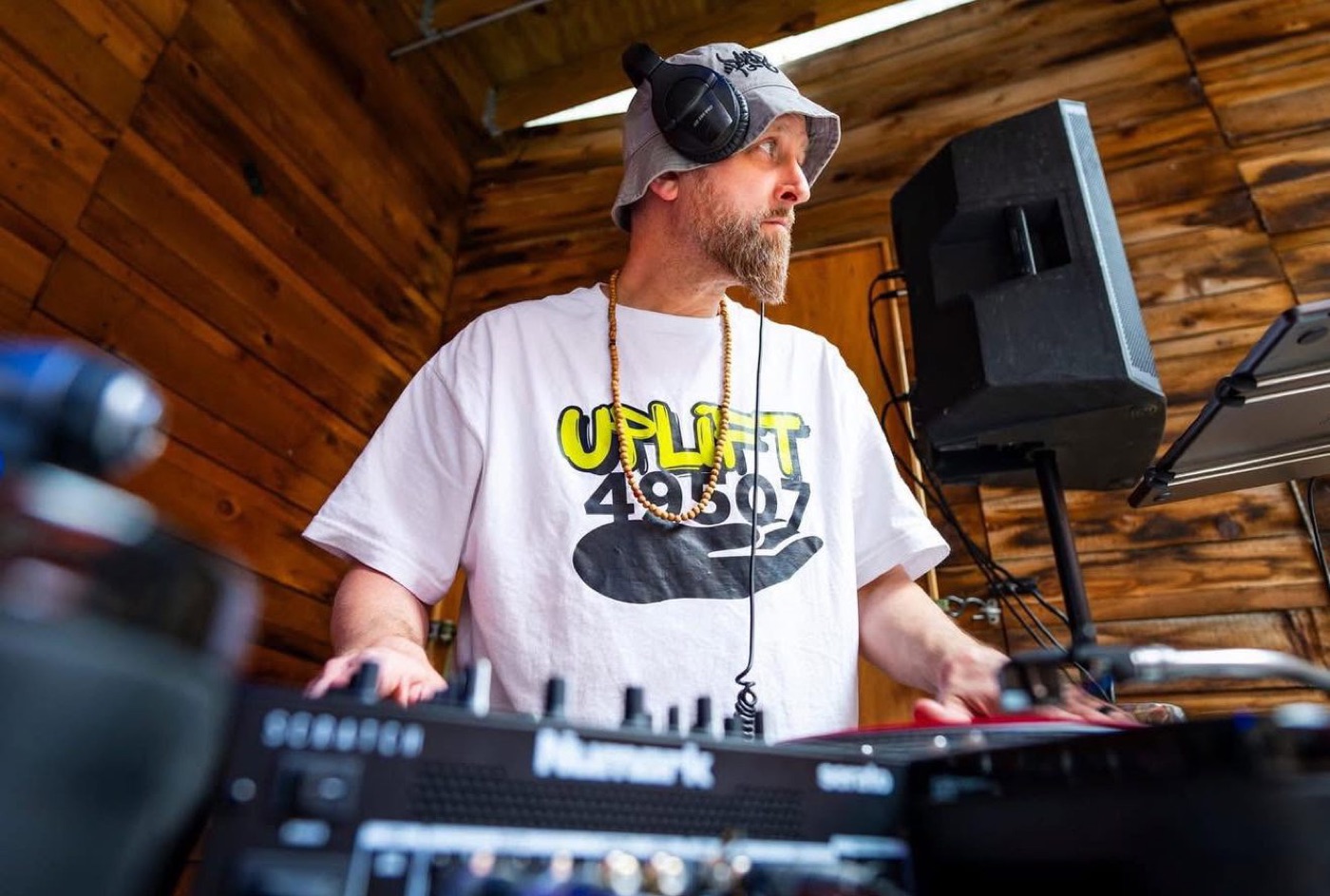
Matt “Monk” Duncan had every reason to compete. At the Grand Rapids Center for Community Transformation, one of his roles was supporting the recruitment of students for YouthBuild, one of several local programs that train young people for construction careers.
He did the opposite. Monk brought West Michigan Construction Institute, Next Step, Job Corps, Kent Career Tech Center, and the Urban League to the same table. Once a year, at an event called Hands-On, students get a chance to meet all the programs and choose the one that fits. Competitors became co-hosts.
Then he went further. For ArtPrize 2026, Grand Rapids’ citywide art competition, Monk invited rival graffiti clans to paint together. These were crews that did not talk and routinely painted over each other’s work. They showed up anyway. They painted side by side, then started talking, then laughing. They did more than just see each other. They experienced each other… as fellow humans.
Now they are committed to meeting quarterly under a name they chose themselves: Dirty Digits. Art professionals from New York took notice and invited the crews to show in their gallery… and plans are in the making to bring Grand Rapids artists to New York and New York artists to Grand Rapids.
From limited experiences to expansive experiences.
Limited to Expansive
This is the second move in Thrive &Prosper's Relationships to Results™ approach, our path from healthierrelationships to better results for the whole city: from Limited Experiencesto Expansive Experiences. Rivalry is the hidden friction that slowsevery city down. The way out is not to defeat anyone. It is to pull up morechairs and lean in.
It starts with one question. When youlook at the same data, the same street, or the same city as someone youdisagree with, ask: "How are you experiencing this differently than Iam?" You do not have to agree. You do have to listen.
A City With No Scapegoats
Ancient scripture describes a new city of peace (Jerusalem) standing on a set of foundational stones. Centuries earlier, a Hebrew leader wrote of a stone the builders rejected the scapegoat becoming the cornerstone. Put those images together, and the people a city once cast out are the very ones holding it up. No more rejected stones. No more scapegoats.
What makes that city possible….. Forgiveness. Not pretending the wounds are not real, its when scapegoat refuse to return violence with violence. Rivalry absorbed… heals.
That is the work in front of us: developing leaders who build communities without scapegoats, who are willing to take punches and not retaliate. Here is the relief in it: You do not have to defeat anyone to win. There is a bigger table, and there is room at it.
